
Digital Product Business Course: A Beginner’s Guide to Starting an Online Business
Digital Product Business Course: A Beginner’s Guide to Starting an Online Business
1. Who This Article Is For
This article is for beginners who want to start an online business, sell digital products, or build an additional source of income without managing physical inventory. If you are a student, freelancer, content creator, or aspiring entrepreneur looking for a practical way to earn online, a digital product business course can help you understand the process and plan your next steps.
2. Introduction
Starting an online business can feel confusing when you do not know what to sell, where to find customers, or how to make your first sale. There is plenty of information available online, but finding a clear path through it can be challenging.
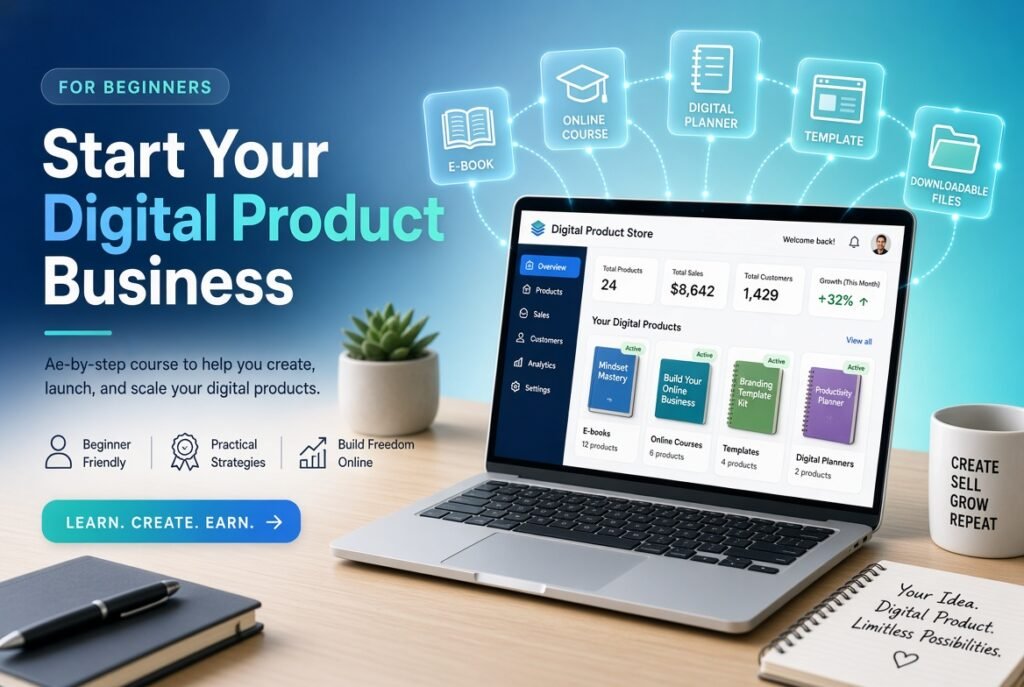
A digital product business offers an alternative to traditional businesses. Instead of storing and shipping physical goods, you can create and sell products such as e-books, online courses, templates, digital planners, and downloadable resources.
However, building a successful business takes more than uploading a product and waiting for customers. You need to understand your audience, choose the right product, create an effective sales process, and learn how to reach potential buyers.
A well-structured digital product business course can help you understand these steps in a logical order. With practical learning, realistic expectations, and consistent effort, you can begin building your online business with greater confidence.
3. What Is a Digital Product Business Like?
A digital product business involves creating or legally distributing products that customers can purchase and access electronically.
Unlike physical products, digital products generally do not require packaging, warehousing, or traditional shipping. Once created, many digital products can be sold repeatedly, although customer support, updates, marketing, and platform fees may still require ongoing work.
Common examples include:
- E-books and guides: Educational resources, practical handbooks, and specialised information.
- Online courses: Lessons that help customers learn a skill or understand a topic.
- Website templates: Pre-designed layouts for WordPress, Elementor, and other platforms.
- Digital planners: Calendars, productivity tools, trackers, and printable resources.
- Design assets: Graphics, icons, presentations, and other creative materials.
- Software and digital tools: Plugins, applications, and other useful digital solutions.
- Membership content: Educational materials, premium resources, or exclusive content offered through a subscription.
People enter this business for different reasons. Some want to monetise an existing skill, while others want to build a business around a topic they understand well.
The right approach depends on your skills, available time, budget, and the needs of your target audience.
4. When Learning a Digital Product Business Becomes Important
You may be ready to take a structured course if you find yourself struggling with important business decisions.
For example:
- You have several product ideas but do not know which one to choose.
- You are unsure how to research demand before investing time in a product.
- You can create digital products but struggle to attract customers.
- You do not understand how to set prices or build a sales page.
- You want to use social media, SEO, email marketing, or paid advertising effectively.
- You have launched a product but are not receiving consistent sales.
- You want to understand the business before spending money on tools or advertising.
These challenges are common among beginners. They do not necessarily mean your idea is bad. Often, you need a clearer strategy, better market research, or a more effective way to communicate your product’s value.
5. Possible Challenges and What a Digital Product Business Course Should Teach You
Choosing the Right Digital Product
One of the first challenges is deciding what to sell. It is easy to choose a product based only on personal interest, but a business needs customers who are willing to pay for a solution.
A good digital product business course should explain how to identify customer problems, research competing products, and evaluate potential demand.
For example, if you have experience with WordPress, you could explore website templates, design resources, or educational guides for beginners. Your existing knowledge may help you create something useful without starting from scratch.
Understanding Your Target Audience
Even a useful product can struggle if it is offered to the wrong audience.
You need to understand who your customers are, what they want to achieve, what problems they face, and why they might choose your product instead of another option.
Customer interviews, search trends, competitor reviews, and online communities can provide useful insights before you create your product.
Creating a Valuable Product
Your product should provide a clear benefit. It does not need to be complicated or contain hundreds of pages. A focused resource that solves a specific problem may be more useful than a large product without a clear purpose.
A course should help you plan the product, organise its content, choose suitable tools, and improve its quality through feedback.
You should also understand copyright and licensing requirements. Only sell materials you created yourself or have the appropriate permission and commercial rights to distribute.
Building a Website and Sales Process
A digital product needs a reliable way for customers to discover it, understand its benefits, pay for it, and receive access.
Depending on your business model, this may involve a website, an e-commerce platform, a checkout system, automated delivery, and customer support.
For example, a WordPress website with WooCommerce can be used to sell eligible downloadable products. The setup should make purchasing straightforward and explain the product, pricing, delivery method, and refund policy clearly.
Marketing and Finding Customers
Creating a product is only one part of the process. You also need to reach people who may benefit from it.
A practical course should cover relevant marketing methods, including search engine optimisation (SEO), social media content, email marketing, and, where appropriate, paid advertising.
The most suitable channel depends on your audience and product. You do not need to use every marketing method at once.
Understanding the Brain, Habits, and Business Decisions
Starting a business involves learning new skills, making decisions, and responding to uncertainty. It is normal to feel overwhelmed when there are too many tools, strategies, and opinions to consider.
A structured learning process can reduce unnecessary confusion by breaking the work into manageable steps. This does not remove the challenges of entrepreneurship, but it can help you make more informed decisions.
6. The Connection Between Learning, Confidence, and Business Growth
Your approach to learning can influence how you build your digital product business.
When you are unfamiliar with online selling, small setbacks can feel discouraging. A product might receive little attention, an advertisement might not convert, or a sales page might need several revisions.
These experiences do not automatically mean that you have failed. They can provide information about customer demand, product positioning, pricing, and marketing.
A practical learning approach encourages you to:
- Set achievable weekly goals.
- Focus on one product idea at a time.
- Test demand before making large investments.
- Review customer feedback without taking it personally.
- Improve your product and marketing based on evidence.
- Give your strategy enough time to produce meaningful information.
It is also important to remember that confidence develops through practice. You do not need to understand every aspect of online business before you begin. You need a reasonable plan, the willingness to learn, and an understanding of the risks involved.
7. How a Digital Product Business Can Affect Your Daily Life
Building a digital product business can influence how you spend your time, manage your finances, and approach your career.
For some people, it becomes a side project alongside employment or study. Others gradually develop it into a larger business as demand grows.
There can be practical benefits, such as developing new skills, reaching customers beyond your local area, and creating products that can be delivered automatically.
However, running a business also requires effort. You may need to spend time researching products, creating content, responding to customers, maintaining your website, and reviewing sales performance.
It is worth considering the effect on your daily routine before committing to a large project. A realistic schedule can help you balance your business with work, family, rest, and other responsibilities.
You should also avoid assuming that digital products provide immediate passive income. Sales are not guaranteed, and some products require regular updates, marketing, and customer support.
8. Digital Product Business Course: Learning and Implementation Options
There are several ways to learn how to start selling digital products. The best choice depends on your experience, learning preferences, and budget.
Structured Online Courses
A structured digital product business course can organise essential topics into a step-by-step learning path. Depending on the curriculum, it may cover product research, creation, pricing, website setup, marketing, and sales optimisation.
Before enrolling, review the course outline, instructor background, practical exercises, support arrangements, and refund terms. Look for specific skills you can apply rather than broad promises of financial success.
Free Learning Resources
Free articles, tutorials, videos, and official platform documentation can help you understand the basics without an upfront course fee.
This approach can be useful when you are still exploring different product ideas. However, you may need to organise the information yourself and verify that the advice is current and relevant to your business.
Learning Through a Small Project
You can also learn by developing a simple digital product and testing whether people find it useful.
For example, you might create a checklist, a template, or a short practical guide. Research the audience, share the product with potential customers, collect feedback, and improve it before expanding your offer.
A Practical Step-by-Step Learning Plan
A beginner-friendly plan could look like this:
- Research: Identify an audience and a problem worth solving.
- Validate: Check competing products and speak with potential customers.
- Create: Develop a focused product with a clear benefit.
- Set up: Choose a suitable platform and configure payment and delivery.
- Launch: Present the offer through relevant marketing channels.
- Measure: Review traffic, customer questions, conversions, and feedback.
- Improve: Make changes based on what you learn.
A course is most useful when it helps you apply these steps to a real business idea.
9. When to Seek Guidance
You do not necessarily need paid training to start a digital product business. However, guidance may be useful when you repeatedly encounter the same challenges or need help with decisions that affect your time and budget.
Consider seeking guidance if:
- You cannot identify a clear customer problem to solve.
- You are unsure whether your product idea has sufficient demand.
- You need help choosing between selling platforms.
- Your website receives visitors but generates few sales.
- You are uncertain about licensing, copyright, payments, or tax obligations.
- You are considering a significant investment in software, advertising, or training.
Before paying for a course or mentorship, compare the available options and check independent reviews where possible. Ask what is included, whether support is available, and what additional costs you may face.
Be cautious of anyone promising guaranteed sales, fixed monthly income, or instant success. A legitimate educational programme should explain the work involved and help you develop practical skills without making unrealistic financial claims.
10. Start Your Digital Product Business with a Clear Plan
If you want to explore digital entrepreneurship, begin with a specific goal rather than trying to build an entire business immediately.
Identify a problem you understand, research whether people want a solution, and choose a product you can realistically create. From there, develop a simple sales process and test your idea with an appropriate audience.
Md Aminur Islam shares information through mdaminurislam.com. You can explore the website to learn more about the available resources and information relevant to your interests.
Whether you choose a structured digital product business course or independent learning, focus on building practical skills, understanding your customers, and making decisions based on evidence.
If you are based in Australia or elsewhere, remember to consider the rules that apply to your location, including consumer protection, privacy, taxation, and intellectual property requirements.
You do not need to build everything at once. A well-researched first product and a manageable plan can provide a useful starting point for learning how online selling works.
11. FAQs About Digital Product Business Courses
What is a digital product business course?
A digital product business course teaches you how to plan, create, market, and sell products delivered electronically. Depending on the curriculum, it may cover product research, pricing, website setup, sales funnels, SEO, and customer acquisition.
Is a digital product business suitable for beginners?
Yes. Beginners can start with a simple product that solves a specific problem. Learning basic market research, product creation, pricing, and marketing can help you make informed decisions. Previous business experience is helpful but not essential.
Can I start a digital product business with no money?
You can begin researching and planning with free resources and tools. However, some costs may arise when creating products, hosting a website, processing payments, or promoting your offer. Starting small can help you manage these expenses.
What digital products can I sell online?
Common options include e-books, online courses, templates, printable planners, design assets, software, and downloadable guides. Choose a product based on customer demand, your skills, and your ability to create or legally distribute it.
Do I need a website to sell digital products?
No. Some marketplaces and digital selling platforms allow you to sell without building a separate website. However, your own website can offer more control over branding, customer experience, and your sales process. Each option has different fees and requirements.
How long does it take to make money selling digital products?
There is no fixed timeline. Results depend on product demand, quality, pricing, competition, marketing, and customer trust. Some businesses make early sales, while others require substantial testing and improvement before finding a workable approach.
Is a digital product business course worth it?
It may be worthwhile if the course provides relevant, practical instruction that saves you time and helps you avoid common mistakes. Compare its curriculum, price, instructor experience, support, and refund policy before deciding. Free resources may be sufficient for some beginners.
How can I market digital products without paid advertising?
You can explore SEO, helpful blog content, social media posts, email newsletters, relevant communities, and partnerships. Focus on providing useful information to an audience that is likely to need your product. Organic marketing can take time and does not guarantee sales.
12. Author Section
Written by Md Aminur Islam
Visit mdaminurislam.com to explore more information and resources related to digital business and online growth.