
How to Start an Online Business with a Small Budget: A Beginner’s Guide
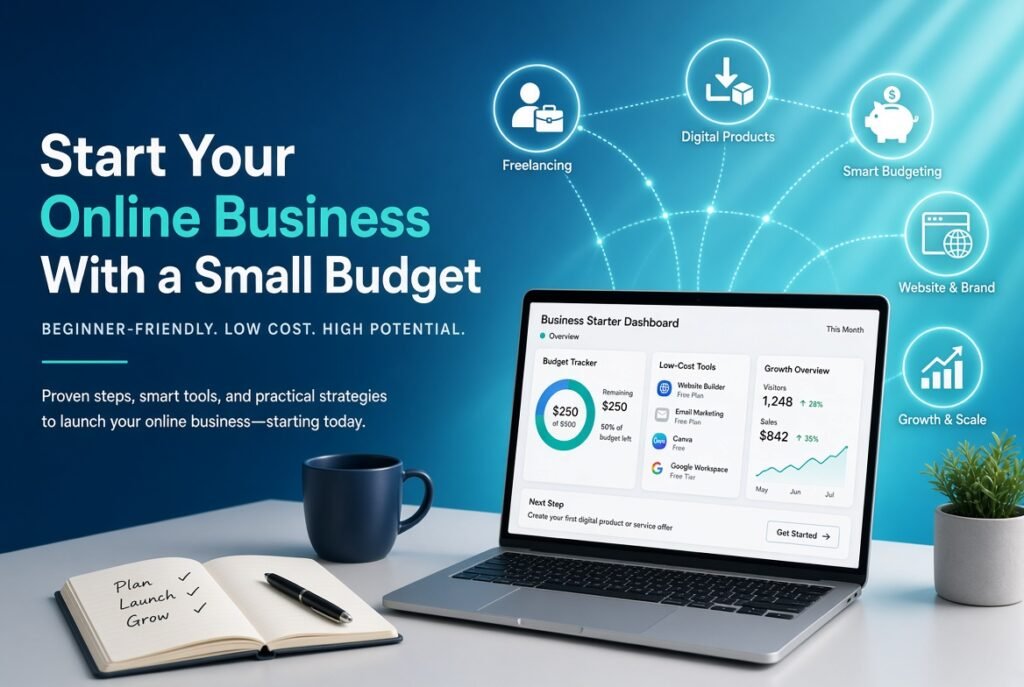
How to Start an Online Business with a Small Budget: A Beginner’s Guide
1. Who This Article Is For
This article is for beginners, students, freelancers, and aspiring entrepreneurs who want to start an online business with a small budget. If you have limited savings, want to earn money online, or are looking for a practical way to turn your skills into income without making a large financial investment, this guide will help you understand where to start and how to manage your resources wisely.
2. Introduction
Starting an online business does not always require a large investment. Many people begin with a computer or smartphone, an internet connection, a useful skill, and a clear understanding of what customers need.
However, knowing where to begin can be challenging. You may have several business ideas but feel unsure about which one is affordable, how to find your first customers, or whether you need to pay for a website and professional tools.
The good news is that you can explore several online business models without spending heavily at the beginning. Freelancing, digital products, online services, and content creation can all be potential starting points, depending on your skills and goals.
The key is to avoid unnecessary expenses, test your idea before investing heavily, and focus on solving a real problem for your customers.
With a realistic plan and consistent effort, you can start building an online business with a small budget while gradually developing the skills and experience needed for long-term growth.
3. What Starting an Online Business with a Small Budget Looks Like
Starting an online business with a small budget means choosing a business model that allows you to begin with limited resources while keeping your initial expenses manageable.
Instead of renting a physical shop, purchasing large quantities of stock, or hiring a team, you can begin with a simple service or product and expand when your business has evidence of demand.
Some affordable online business ideas include:
- Freelancing services: Offer website design, graphic design, writing, video editing, or virtual assistance.
- Digital products: Create and sell e-books, templates, digital planners, or educational resources.
- Online tutoring: Teach a subject, language, or practical skill you understand well.
- Affiliate marketing: Earn commissions by referring customers to eligible products or services.
- Content creation: Build an audience through YouTube, blogging, or social media and explore suitable monetisation options.
- Print-on-demand products: Sell eligible designs on products produced and shipped by a third-party provider.
- E-commerce: Sell products online using a manageable inventory or a carefully tested product range.
- Website design services: Build websites for small businesses using WordPress, Elementor, and other suitable tools.
Each option has different costs, risks, and time requirements. For example, freelancing may require little more than existing equipment and a reliable internet connection, while e-commerce may involve inventory, delivery, returns, and customer service expenses.
Choosing a business model that matches your existing skills can help you reduce the cost of getting started.
4. When Starting an Online Business with a Small Budget Becomes Challenging
A limited budget can encourage careful planning, but it can also make certain decisions more difficult. Recognising these challenges early can help you avoid common mistakes.
You may face difficulties if:
- You spend money on tools before identifying a clear business idea.
- You purchase an expensive course without checking its practical value.
- You invest in inventory before confirming customer demand.
- You try to launch several business models at the same time.
- You rely entirely on paid advertising without understanding the costs.
- You offer services without clearly explaining what customers will receive.
- You expect immediate profits and abandon the business before collecting useful feedback.
- You underestimate payment fees, hosting costs, delivery expenses, or other ongoing charges.
For example, buying multiple premium WordPress plugins before finding your first web design client may put unnecessary pressure on a limited budget.
A more practical approach is to use tools you already have, create a simple service offer, and invest in additional resources when they solve a genuine business problem.
Starting small does not mean compromising on honesty or quality. It means making careful decisions about where your money and time will have the greatest impact.
5. Possible Challenges and How to Overcome Them
Choosing the Right Business Idea
One of the first challenges is deciding what kind of online business to start.
An idea may sound attractive, but you also need to consider whether customers are willing to pay for it and whether you can deliver the product or service effectively.
Begin by listing your existing skills, interests, equipment, and available time. Then identify problems that people or businesses need help solving.
For example, if you already know how to design WordPress websites using Elementor, you could offer landing page design, website redesigns, or WooCommerce store setup.
Starting with a skill you already possess can reduce training costs and help you reach the market sooner.
Finding Customers Without Spending Much
A small budget may not support extensive advertising, so finding customers through direct outreach and useful content can be important.
You could create a professional portfolio, share relevant work on LinkedIn, participate appropriately in business communities, or contact potential clients with personalised proposals.
For service-based businesses, a small number of suitable clients may be enough to help you build experience and collect testimonials.
Avoid sending generic promotional messages to large numbers of people. Focus on demonstrating how your service can address a specific customer need.
Managing Limited Resources
When your budget is small, every expense matters.
Separate essential business costs from optional purchases. Essential expenses might include internet access, a suitable domain, hosting, or a payment service, depending on your business model.
Optional expenses might include multiple premium subscriptions, advanced automation tools, or expensive branding packages that are not yet necessary.
Use free or affordable alternatives where appropriate, but review their limitations, licensing terms, privacy practices, and suitability for commercial use.
Building Trust as a New Business Owner
Customers may hesitate to purchase from a business they have never heard of. A professional presentation and clear communication can help reduce this uncertainty.
Explain your services, show examples of your work, state your prices clearly, and describe what customers can expect.
If you are new, consider completing a small project for a genuine client at an appropriate introductory price. Use the experience to improve your process and, with permission, build your portfolio.
Never fabricate testimonials, client results, or professional experience to make your business appear more established.
Understanding the Financial Side
A business can generate revenue without making a profit. You need to account for the costs associated with delivering your products or services.
Depending on the business, these may include hosting, software subscriptions, payment processing, advertising, product production, refunds, and taxes.
Track your income and expenses from the beginning. This helps you understand which activities are worthwhile and when you can reasonably afford to invest in growth.
6. The Connection Between Planning, Confidence, and Business Growth
Starting an online business with limited money can feel stressful, particularly when you are learning new skills and trying to make the right decisions.
It is easy to compare your early progress with businesses that have been operating for years. However, established businesses may have more experience, stronger customer relationships, and greater resources.
Your starting point does not need to look the same as theirs.
A manageable plan can help you focus on practical actions rather than becoming overwhelmed by every possible business opportunity.
For example, you could set a weekly goal to improve your portfolio, contact potential clients, publish useful content, or test a product idea.
When something does not work, review what happened and identify what you can learn. A lack of customer interest may indicate that your offer needs clarification, your audience needs better targeting, or the product needs further research.
This does not guarantee success, but it helps you make decisions based on evidence instead of spending money on assumptions.
Remember that building a business takes time. You do not need to have every tool, skill, or process in place before taking your first practical step.
7. How a Small-Budget Online Business Can Affect Your Daily Life
An online business can offer flexibility, but it also requires time, organisation, and realistic financial expectations.
If you are already working or studying, you may need to build your business around your existing responsibilities. A simple schedule can help you make progress without committing more time than you can reasonably manage.
For example, you could spend a few hours each week improving your skills, contacting prospective clients, or creating a digital product.
There may be benefits beyond immediate income. You can develop practical skills, build professional relationships, create a portfolio, and learn how to manage customers and projects.
However, an online business can also involve uncertain income, demanding deadlines, difficult customers, and periods when sales are limited.
Avoid borrowing money you cannot comfortably repay or spending funds needed for essential living expenses on an untested idea.
A sustainable business should fit your current circumstances rather than create unnecessary financial pressure.
8. Practical Steps to Start an Online Business with a Small Budget
Step 1: Identify Your Skills and Resources
Start by listing the skills you already have, the equipment available to you, and the amount of time you can commit.
You might be good at website design, writing, editing videos, teaching, organising information, or creating digital resources.
Choose an option that makes use of your existing abilities instead of requiring a large initial investment in unfamiliar tools.
Step 2: Research a Specific Market
Identify a group of potential customers and learn about their needs.
You can research competitors, read customer reviews, explore search results, and observe the questions people ask in relevant online communities.
The goal is to discover a problem that you can realistically solve and determine whether customers are willing to pay for a solution.
Step 3: Choose a Simple Business Model
Avoid trying to run several businesses simultaneously at the beginning.
Choose one model and develop a clear offer. For example, a beginner website designer might offer a specific landing page package instead of advertising every possible web design service.
A focused offer is easier to explain, price, deliver, and improve.
Step 4: Create a Minimum Viable Offer
You do not need a large website or extensive product catalogue to test an idea.
A freelancer can begin with a small portfolio and a clear service description. A digital product creator can develop one useful template or guide. An online tutor can start by offering a clearly defined lesson package.
Make sure your offer provides genuine value and sets realistic expectations.
Step 5: Use Affordable Tools
Choose tools based on your actual needs rather than popularity.
Depending on your business, you may be able to use free design software, free productivity tools, a basic website setup, or an existing marketplace.
For a WordPress service business, a portfolio website can help demonstrate your skills. However, if the cost of a website is currently beyond your budget, you can begin by presenting your work through a suitable professional portfolio platform.
Upgrade only when a paid tool provides enough practical benefit to justify its cost.
Step 6: Find Your First Customers
Start with channels that allow you to reach relevant people without a large advertising budget.
These may include LinkedIn, professional Facebook groups, referrals, freelance marketplaces, direct outreach, or useful content on social media.
Explain what you offer, who it helps, and how customers can contact you.
If you are offering a service, personalise your proposals and demonstrate that you understand the prospective client’s needs.
Step 7: Deliver Quality Work and Collect Feedback
Your first customers can help you understand what works and what needs improvement.
Communicate clearly, agree on the scope of work, meet realistic deadlines, and provide the service or product you promised.
Ask satisfied customers for honest feedback and permission before using their comments or work in your portfolio.
A positive customer experience can help you build trust and encourage referrals.
Step 8: Reinvest Carefully
Once your business begins generating revenue, decide which expenses can help you improve delivery, reach customers, or save time.
You might invest in better hosting, a useful software subscription, additional training, or targeted marketing.
Keep records of your revenue, costs, and available cash before making these decisions. Revenue should not automatically be treated as money available to spend.
Growing gradually can help you understand the business before taking on greater financial commitments.
9. When to Seek Professional Guidance
You may benefit from professional guidance if you are uncertain about choosing a business model, validating an idea, setting prices, or managing your finances.
A relevant online business course can provide a structured learning path, while a mentor or experienced professional may help you understand challenges specific to your industry.
Before paying for guidance, check the curriculum, instructor experience, practical exercises, support options, and total cost.
If your budget is extremely limited, begin with reliable free resources and focus on developing one marketable skill. Paid training is not always necessary to make your first move.
You may also need professional advice about business registration, taxation, contracts, data protection, or consumer rights, depending on your location and business activities.
Be cautious of programmes that promise guaranteed income, instant success, or a specific monthly profit without explaining the risks and work involved.
Good guidance should help you make informed decisions rather than pressure you into spending more money than you can afford.
10. Start Your Online Business with Md Aminur Islam
Starting an online business with a small budget is possible, but success depends on choosing a suitable business model, understanding your customers, and managing your resources carefully.
You do not need to build a large operation immediately. Start with one useful skill, one clearly defined offer, and a practical way to reach potential customers.
Focus on learning through real projects, tracking your expenses, and improving your offer based on customer feedback.
For more information and resources related to digital business and online growth, visit mdaminurislam.com.
Whether you want to offer freelance services, sell digital products, or build an online store, aim to create a business that fits your skills, budget, and long-term goals.
Take manageable steps, avoid unnecessary expenses, and give yourself time to understand what works for your chosen market.
11. FAQs About Starting an Online Business with a Small Budget
How can I start an online business with a small budget?
Begin by identifying a skill or product idea that meets a real customer need. Research the market, create a simple offer, use affordable tools, and look for customers through suitable low-cost channels. Track your expenses and invest more only when there is a clear reason to do so.
Which online business is best for beginners with little money?
Freelancing, online tutoring, digital products, and certain content-based businesses can be suitable options. The right choice depends on your existing skills, available time, customer demand, and the costs involved. A service based on a skill you already have may be a practical starting point.
Can I start an online business without investment?
You can explore and test some online business ideas using existing equipment and free resources. However, most businesses involve some combination of time, internet access, payment fees, software, or other expenses. It is more realistic to aim for a low-cost start than to assume every business can operate entirely for free.
What is the cheapest online business to start?
Some freelance services, such as writing, virtual assistance, and website design, can have relatively low startup costs if you already have the necessary skills and equipment. Digital products can also be affordable to test, although creation and marketing still require time and effort.
How can I get my first online customer without paid advertising?
You can build a small portfolio, ask for referrals, contact relevant prospects with personalised messages, participate in appropriate professional communities, or publish useful content. Focus on a specific customer problem and clearly explain how your service or product can help.
Do I need a website to start an online business?
No. You can start with a freelance marketplace, a suitable selling platform, or a professional portfolio page. A dedicated website can provide greater control over branding and customer experience, but you can consider building one when it fits your budget and business needs.
How long does it take to make money from an online business?
There is no guaranteed timeline. Freelancers may find a client relatively quickly, while product-based businesses can require more research, product development, and marketing. Results depend on your skills, offer, market demand, competition, and ability to reach customers.
Is an online business a good option alongside a full-time job?
It can be, provided you can manage the workload and avoid conflicts with your employment responsibilities. Starting with a small, clearly defined offer and a realistic weekly schedule can help you test the business before making major career or financial decisions.
12. Author Section
Written by Md Aminur Islam
Md Aminur Islam shares information and resources related to digital business, online entrepreneurship, and digital growth.
Website: https://mdaminurislam.com/